Showing posts with label futuristic. Show all posts

Wednesday, January 13, 2016

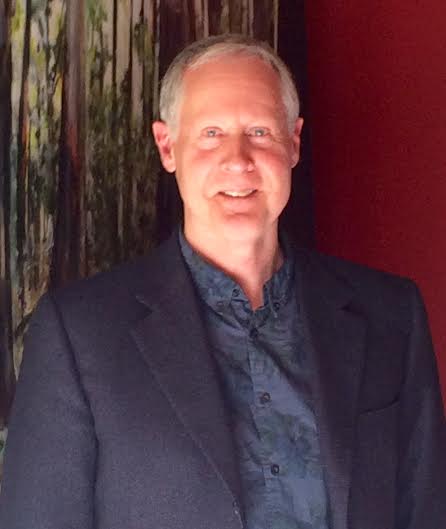
Interview with sci-fi author Michael Leon

Sci-fi author Michael Leon is in the hot seat today talking about his new novel, Cubeball.

During his virtual book tour, Michael will be awarding a $50 Amazon or Barnes and Noble (winner’s choice) gift card to a lucky randomly drawn winner. To be entered for a chance to win, use the form below. To increase your chances of winning, feel free to visit his other tour stops and enter there, too!

Bio:
I worked with national and international organisations as a business analyst in Australia and overseas. I authored many business books analysing the foodservice and food retail industry in Australia, Europe and Asia, as well as agribusiness global trends. I also ran a consultancy business that assisted Australian enterprises to develop new markets in Australia and overseas.

I commenced writing science fiction novels full time in 2009. It was a life-long interest of mine. I have written five novels - all exploring contemporary social issues in future speculative worlds. They are: Shadow Dance; Extinction; Cubeball; Titan Sages, and Alive. My novels blend speculative science, new age and poetry. Readers of novels such as Carl Sagan’s Contact would enjoy my novels.


Do you ever wish you were someone else? Who?
As a long-term admirer of all things science fiction, I have on many occasion wished to be one of the great authors of the past and present. Ray Bradbury springs immediately to mind, as he wrote one of the great first paragraphs in a science fiction book. Also given my passion for exploration both of our world (literally) and beyond our Earth (my imagination), I have occasionally wished I could be Kim Stanley Robinson, as he wrote the Mars trilogy. I'm convinced he really visited Mars on a secret mission, such was the realism of his story!

What did you do on your last birthday?
I journeyed to a lovely part of Australia, the Barossa Valley. It is the Bordeaux of Australia, nestled between a dozen or so small townships in South Australia. I spent a week there with my partner and we explored many of the wineries in the area and sampled the local food. Tres bon!
What part of the writing process do you dread?
The editing side of writing is a painstaking process. Where writing the first draft takes me around 2 to 3 months, editing can be 3 to 4 times longer. I self-edit as many times as I can tolerate, before I hand it to my mentor. My fabulous mentor, Sam is a hard task master and I do dread the ‘sea of red ink’ she layers over my manuscript. But she provides me the tough love that I need to polish my draft to ever higher levels.

Do you ever suffer from writer’s block? If so, what do you do about it?
Writer’s block comes and goes during every writer's journey. I’ve learnt to accept that it is a natural part of the writing process. But there are so many facets of a novelist’s routine that must be addressed, from writing and editing to marketing. When I tire of one, I turn to another. If it is a particularly severe dose of writer’s block, I turn to my other great passion – travel – particularly to France! 

Please tell us about your latest release.
A naturally gifted ex-national champion and a savant with a computer-like mind compete against the world’s best in the 22nd century’s most popular sport - Cubeball - a chess-like, technology-enhanced, snooker of the future where the world stage is dominated by gambling, drugs and massive audiences. 

Cubeball is a futuristic science fiction novel (90,000 words) that follows the life of Mickey Allen and his struggle to compete in the world's most popular sport. Mickey, a cubeball player with a natural and unique talent, is a one-time national champion - the youngest ever. Disillusioned by an industry dominated by illegal business dealings and technological enhancements, Mickey spends ten years in refuge on Mars until his drug-fuelled life reaches a point of homeless destitution.

Without means of subsistence, Mickey looks to his estranged sister Riley, a success in her own right in the cubeball industry, to bail him out and fund his return to Earth. Their shared past holds betrayals that drove Mickey to leave the industry. After some caveats to lift him out of his destructive drug haze, he forms an unlikely union with business-savvy Riley as his comtech, and Ludwig as his strategist - a savant with an uncanny gift for seeing the perfection of Mickey's game, inspired by his ability to recall the music of Beethoven.

Together, Mickey's new team seeks to compete on the world stage, a global industry dominated by Mickey's nemesis - his unscrupulous former manager, Johnnie Draxma. Johnnie is the shadow that dominates Mickey's origins in the game and the betrayal that fuels his destructive habits. Amongst high stakes and an audience of millions, Mickey must battle his own demons and those of his past, as he learns about truth, trust and friendship.


Excerpt from Cubeball:
At that moment Mickey knew he had to play his way and make a shot that would not be forgotten. He called “power-play.”

He imagined the perfect shot in his mind’s eye as he circled the table twice, deliberating his fateful shot. The balls loomed large, but strangely different. The table appeared more circular than a cube as he lowered his chin to his carbon steel cue. The whole shot played in his mind as he drew back the cue to strike the cue-ball with a force that engulfed the whole stadium.

The crack of the cue-ball as it struck its target echoed sharply its warning of an imminent tidal wave of spin and curve that would capture the imagination of every fan in the stadium, or at home in front of their cubebit. In one game changing savage strike, the red ball fell into the pocket as the cue-ball savagely spun into the red triangle, spreading the reds in all directions from the centrifugal force of the cue-ball. Mickey slotted twelve red and black combinations in four minutes, gaining an unassailable lead. He followed that with a perfect defensive stroke, leaving the cue-ball safely jammed behind yellow. Flaveau conceded the game and the match, shell-shocked by the unique high-spin attack Mickey had unleashed. The break was soon nicknamed ‘the pulsar’ and it had secured Mickey the first semi-final win and a shot at the world title.


Links:

Thanks for being here today, Michael. Happy writing.


a Rafflecopter giveaway


Friday, February 21, 2014

Interview with sci-fi romance author Victoria Pinder

Please welcome today’s guest, sci-fi romance author Victoria Pinder. She’s sharing a bit about her novel The Zoastra Affair.

Victoria will be awarding a $20 Amazon GC to a randomly drawn commenter during the tour. To be entered for a chance to win, use the form below. To increase your chances of winning, feel free to visit other tour stops and enter there, too.

Bio:
Victoria Pinder grew up in Irish Catholic Boston before moving to the Miami sun. She’s worked in engineering, after passing many tests proving how easy Math came to her. Then hating her life at the age of twenty four, she decided to go to law school. Four years later, after passing the bar and practicing very little, she realized that she hates the practice of law. She refused to one day turn 50 and realize she had nothing but her career and hours at a desk. After realizing she needed change, she became a high school teacher. Teaching is rewarding, but writing is a passion.

During all this time, she always wrote stories to entertain herself or calm down. Her parents are practical minded people demanding a job, and Victoria spent too many years living other people’s dreams, but when she sat down to see what skill she had that matched what she enjoyed doing, writing became so obvious. The middle school year book when someone wrote in it that one day she’d be a writer made sense when she turned thirty.

When she woke up to what she wanted, the dream of writing became so obvious. She dreams of writing professionally, where her barista can make her coffee and a walk on the beach, can motivate her tales. Contemporary romances are just fun to write. She’s always thinking whose getting hurt and whose story is next on the list to fall in love. Victoria’s love of writing has kept her centered and focused through her many phases, and she’s motivated to write many stories.

Member of Florida Romance Writers, Contemporary Romance, Fantasy, Futuristic and Paranormal chapter of RWA, and in Savvy Authors.

Welcome, Victoria. Please tell us about your current release.
The Zoastra Affair is a science fiction romance based on what I wanted to read growing up. Science fiction is male geared, and I wanted to read a space adventure where love and a space ship can happen. I grew up watching Star Trek, Star Wars, Battlestar Galactica, Farscape, Babylon 5, so how can I not think about space. This time it’s a female point of view and love can happen on a space ship.

What inspired you to write this book?
The books I wanted to read didn’t exist. First it was male oriented growing up. Then as a teenager, I loved reading about teenagers. But Wesley Crusher is the joke character on Star Trek for a reason. Teenagers are not smarter or more appealing then educated adults. It makes reading YA space adventure hard for me. But why can’t women fall in love with smart men?


Excerpt:
I’m going to have to steal someone else’s body to get out of here.

“Ariel, are you listening?”

Ariel Transcender stared dumbfounded at the mother superior of her prison, a/k/a Aulnale School for Orphans. “Yes, mistress.”

She had no idea what happened, though she pasted a fake simpering smile of appreciation on her face. Ms. Rochelle walked away.

A few minutes later, Ariel looked out the window again, tuning out Rochelle’s mind numbing lecture on what was proper behavior when near a man. The boarding home on this planet gave the stupidest lectures of the galaxy. Her lips curled into a sneer. Women were not excited to be bound to men.

Could I do this to someone else? Do I have any other choice?

Lenchena, the teenage girl who’d stolen her adult body and taken off on Ariel’s ship, needed to be found. And Ariel refused to listen to the daily drivel about always listening to a man.


What exciting story are you working on next?
I’m finishing my Collins brothers series, book 4. They are contemporary and the first book comes out next in April, 2014. And I’m working on the sequel to the Zoastra Affair, tentatively The Zoastra Betrayal.

When did you first consider yourself a writer?
I wrote all my life. Yet I hated English class so much as a student. So subjective, and English teachers never seemed to dwell on anything I considered important. And red curtains do not always means anger, danger and/or fire. Sometimes red curtains are mentioned because they are pretty and the author wants the character to exist in the real world. But at home, I always wrote bad fan fiction or horrible stories for myself. Writing was my way of getting out of my head and the stress of the world. But one day I spoke at length to a Jewish rabbi. No I’m not Jewish. I’m Catholic, but he looked at my hands and told me I have writer hands. Might have been the pen marks. IDK. But he told me if I enjoy writing, then I should be focusing on that. This was a eureka moment of my life. The answer seemed so obvious. But I needed someone to tell me it was okay to write and people do it.

Do you write full-time? If so, what's your work day like?  If not, what do you do other than write and how do you find time to write?
I wish. One day. So I’m a high school advanced placement teacher of US Government, Macroeconomics and US History. So work is stressful. And until the engagement/wedding planning took over, I went home and then took writing as a second job. In 2013, I went home and wrote 2000 words aday. Call me super dedicated. Then as I said my engagement took over my life. And I’ve taken the former writing time, and dedicated it to planning the wedding. I will be doing a lot of things myself, so the planning time is good. And come July, wedding is in June, I have a major promise that I get my own office. So the writing comes back big time then! But in this time, I’m enjoying every moment of the wedding planning stuff. And the time comes from being organized and not watching much television.

What would you say is your interesting writing quirk?
My fiancé has informed me that when I’m thinking about what I write, I put the hot coffee/tea/lemon water on my cheek and tilt my head. Somehow he jokes this is how I get inspiration. But I’m just thinking. The doctors always said my cheeks had rosacea, but perhaps it’s the hot water I hold up.

As a child, what did you want to be when you grew up?
A lawyer. And I did it. Then I realized what my thoughts about the law and the practice of law are very different. I’m not cut out to be a lawyer. So I walked away, and honestly don’t regret that moment at all. I love my life, and couldn’t trade it away for an 80 hour thankless desk job where I die a miserable lonely existence. Perhaps it wouldn’t have been that bad, but to me, it was death itself.

Anything additional you want to share with the readers?
Don’t let doubts get in the way of accomplishments. Sometimes I think the problem with adult hood is that we all go to sleep and stop pushing ourselves everyday. As a teenager and child we all had great expectations about life. Then when it was time, the direction of what to do goes away and we flounder until we sleep. But the best part of being an adult is directing our own lives and realizing that accomplishment is possible. So don’t forget to reward yourself for accomplishing and set the next goal to attain.

Visit me online at:


YouTube  
  

Thanks, Victoria!

a Rafflecopter giveaway


Monday, June 18, 2012

Interview with novelist Pamela F

Romance and paranormal author Pamela F is our guest today. She's going to talk a bit about her newest novel, Last Rights.

Bio:
When asked why she writes romance, Pamela’s answer is simple. There’s too much violence, anger and hatred in this world, and this is her way of bringing back a tiny bit of joy.

Her favorite stories to write are the ones about the common character like Fallon Monroe—the underdog, the persecuted, the one against the many, the small against the large, who somehow manage to rise above adversity and undefeatable odds to triumph.

And always with a happy ending.

Welcome, Pamela. Please tell us about your current release.
The title, Last Rights, is a play on words. The book is set in a future where human cloning is used for organ harvesting. Human clones are created for the sole purpose of organ donation, and the First Rights law allows a True Born person the “first right” to the organs of the clones created with their DNA. The book has several of my favorite elements: cute kids, redeemable villains, (and a couple not so redeemable) a tortured hero, and a heroine who thinks herself ordinary but manages to reach inside herself to find superhuman courage she didn’t know she possessed.

What inspired you to write this book?
Honestly, most of my ideas come from news or current issues that hit a little too close to home and scare me. There have been a lot of movies and urban legends about unscrupulous human organ harvesting, and while I know they (most) are not real, the idea scares me so much I have chosen not to list myself as an organ donor. I also believe human cloning is closer than we all think. And as in all modern advancements, there will be someone unscrupulous waiting in the shadows to take advantage, or do wrong with something that could otherwise be a great benefit to mankind. I guess as a writer, I see villains lurking behind every corner.

What exciting story are you working on next?
In keeping close to my love of paranormal, I’m working on a three book series about psychic triplet sisters separated at birth. The government wants to use them, their enemies want them dead. And the men in their lives aren’t exactly sure what to do with them.

When did you first consider yourself a writer?
I have been a storyteller since I was a little girl. When I was little I think I liked the attention aspect of telling stories to my schoolmates, but when I got older and hooked on reading, I discovered the magic of it. Now in my adult years the attention aspect is gone; writing is a very solitary occupation, so it’s all about the allure of what I’m creating. I consider myself a little bit of a mad scientist.

Do you write full-time? If so, what's your work day like?  If not, what do you do other than write and how do you find time to write?
I do have a day job, but fortunately for me I also have a very understanding family. My writing day consists of 3-4 hours of writing time, intermixed with the occasional annoyance like laundry or sweeping. Writing takes priority though, so the drawback is a messy house. I consider myself one of the luckiest girls alive because not only is my husband very supportive, he also cooks.

What would you say is your interesting writing quirk?
I don’t drink coffee. Can’t stand the stuff. I consider this a writing quirk in that I can function as a writer without it.

As a child, what did you want to be when you grew up?
Well, once upon a time I wanted to be a trapeze artist. Seriously. I also wanted to be a member of the US Olympic Equestrian team. But since I was about ten years old, I’ve wanted to be a writer. I thought it was a much more glamorous job than it has turned out to be, but I love creating stories so much it doesn’t matter that I spend my day in sweats and ragged slippers.

Anything additional you want to share with the readers?
After five books I still haven’t gotten used to the fact I can call myself a published author. It has never become commonplace to hear someone say they loved my book, or they find my career sooo glamorous, and I hope the thrill never fades. Honestly, I still find the idea that people can actually buy my books and read them absolutely magical, and I think I will always find it a tad unbelievable. That’s a good thing, because it’s humbling.

Thanks for stopping by today, Pamela, and sharing a bit about yourself and your writing.


Tuesday, June 12, 2012

Interview with novelist Linda Andrews


Today's guest, Linda Andrews, is here to talk about her sci-fi novel The Syn-En Solution.

Bio:
Linda Andrews lives in Phoenix, Arizona with her husband, three children and a menagerie of domesticated animals. While she started writing a decade ago, she always used her stories to escape the redundancy of her day job as a scientist and never thought to actually combine her love of fiction and science. DOH! After that Homer Simpson moment, she allowed the two halves of her brain to talk to each other. The journeys she's embarked on since then are dark, twisted and occasionally violent, but never predictable.

Welcome, Linda. Please tell us about your current release, The Syn-En Solution.
I think the book blurb tells it best:

A woman from the past. A cyborg with no future. They have every reason to mistrust each other but one: survival.

When Nell Stafford passed out it was 2012. When she wakes up naked aboard a starship it's 2138, and she's surrounded by the Syn-En: synthetically-enhanced soldiers with a grudge against humans like her. She doesn't know where she is or what's happened, only that her life has been destroyed and everyone she's ever known is dead.

Their leader Beijing York has just discovered his people's creators--humans--have betrayed them. They were promised freedom and equality in exchange for settling a newly discovered planet at the other side of a wormhole. But the Syn-En have outlived their usefulness.

The offer was a trick.

The wormhole has collapsed, and now both Nell and the Syn-En are trapped far, far from Earth to face almost certain death.

Bei has lost his future, and Nell has lost her past.

But Nell gained something in her 120-year sleep; somehow, she knows everything the Syn-En need to survive. Now she must convince Bei and his people to trust her--as soon as she learns to trust the mysterious intelligence.

What inspired you to write this book?
I read an article in US News and World Report about the next generation of prostheses being tested on injured military personnel. These limbs would incorporate sensors and a computer chip that would allow the brain to interact with the next limb, giving a better range of mobility and finer motor skills than current prostheses. From here, it was a matter of asking an author's favorite question: What if? And before I knew it I had created a group of cyborgs that basically needed to save mankind. Then I drew upon the Knights Templar history and had the humans they saved turn against them in a power play.

Excerpt:
Nell is in for a culture shock:

"Is that what you call it?" Nell planted two feet on his knees and shoved away from him. His hold on her breasts remained strong and her action tore at her chest. Pain overloaded her nervous system and static crackled inside her head. The only way she could escape would be if she gave herself a rather excruciating mastectomy. Panting through the sensation, Nell stopped struggling and hung limply between her captors. "Cause from where I stand, you're copping a feel."
Ignoring her sarcasm, the man focused on her chest. A burst of yellow light filled the room, highlighting the caduceus tattooed on his forehead. "You may feel a mild discomfort as the probes enter your skin."
Nell struggled to reconcile the caduceus with her current treatment. Why would a man with a medical insignia torture her? Unless he wasn't out to harm her. Hadn't the Grace Jones wannabe said Nell would get along with a bang? A stabbing pain flared up her chest, then a burning filled her veins like an IV running too fast. Cold air stung her teeth as she inhaled.
"Mild! That hurts like an infected hangnail. Why didn't you give me some sort of local anesthetic to numb the area?"
"It would have reacted with the peroxides." His grip on her breasts loosened, but his attention didn't waver from the damaged skin. "I do not believe you would survive the explosion. You are quite fragile."
Nell snorted. Fragile people didn't survive the pandemic of 2010 or the North American invasion that followed. She was a survivor, yet somehow she sensed that someone had changed the rules, if not the game entirely. "That woman injected something in my breasts to make them explode?"
The doctor nodded. "A peroxide and a catalyst, that when mixed together create a very powerful bomb."
Nell pulled her legs closer to her body, wanting desperately to cover herself or to fall asleep and wake up safe in her bed. "That's just wrong."

What exciting story are you working on next?
Currently I'm working on a sequel to my apocalyptic book, Redaction called Melt Down. In it, the people that we met in the first book are trying to make their way out of Phoenix, Arizona to the safety of some abandoned mines in Colorado before the thousands of stored spent nuclear fuel rods begin their melt down, basically sterilizing most of the Earth's surface. If my sarcastic font was working, I'd say the future was so bright it practically glowed. J

When did you first consider yourself a writer?
I still don't really consider myself a writer. Probably because I can't make a living off of it, yet. I consider myself a storyteller because I really write to tell the stories and I do it for the love, not the money. Although, I wouldn't be opposed to doing it for the money. I could buy a lot of books with money.

Do you write full-time?
Alas, no. But one day, I know I will.

If not, what do you do other than write and how do you find time to write?
I work as an organic chemist for a water laboratory. I usually write at night when I get off of work but I have an ipad so I can make notes during the day and this helps me focus my hours at night. I used to use sticky notes but then got lost, so the ipad works much better. I try to write on weekends but am not always successful—family and hubby want their time too.

What would you say is your interesting writing quirk?
I write extremely intricate plots but I can't plot. If I do try to plot my brain figures I already wrote the story so I can't write the story. And while I have lots of story ideas I can't write until I get just the right characters to bring those stories to life. Sometimes I'm waiting a very long time.

As a child, what did you want to be when you grew up?
I so wanted to be an Egyptologist, but then I learned I was extremely claustrophobic and there went that. Then I wanted to be a nurse, but my family told me I couldn't because I was too smart. I never understood that comment, as nurses are pretty smart people. In the end I just fell into science and was planning to go into the Peace Corps but I met my husband, married and became pregnant so then I switched to laboratory work. I love bench work and my husband and I may still join the Peace Corps after we retire.

Anything additional you want to share with the readers?
The Syn-En Solution is on sale for 99 cents for the length of the tour then it will go up to 2.99, so please take advantage of the lower price. Also, I plan to write more books in the series, but it'll be next year until the third book comes out. Until then, I have a question for you: Have you ever seen the future in an invention?