Monday, June 22, 2020

New interview with crime fiction novelist Ed Duncan

A hearty welcome back to crime fiction author Ed Duncan. We’re chatting about his new novel, Rico Stays.

You can read our last interview about The Last Straw.

Bio:
Ed is a graduate of Oberlin College and Northwestern University Law School. He was a partner at a national law firm in Cleveland, Ohio for many years. He is the original author of a highly regarded legal treatise entitled Ohio Insurance Coverage, for which he provided annual editions from 2008 through 2012. Rico Stays is the third novel in the Pigeon-Blood Red Trilogy which began with Pigeon-Blood Red and was followed by The Last Straw. Ed, originally from Gary, Indiana, lives outside Cleveland.

Welcome back to Reviews and Interviews, Ed. Please tell us about your newest release.
Rico Stays continues the saga of the uneasy friendship between two men from different sides of the tracks, each of whom harbors a secret admiration for the other. Paul Elliott is an African American lawyer in a large, mostly white corporate law firm in Chicago, and Richard "Rico" Sanders is a white enforcer/killer for hire, but one with a conscience. Their paths cross when Rico is gravely wounded in a shootout with the hot-headed nephew of a local mob boss and three other men. Rico dispatches the three men, one of whom has a brother who has just been released from prison in California, but the nephew escapes and vows revenge. The brother arrives in Chicago also seeking revenge and joins forces with the nephew and others, but the brother is conflicted because of a budding relationship with an old girlfriend who thinks he has abandoned his criminal past.

After a brief hospital stay, Rico is released but he is in no condition to face multiple gunmen. Therefore, his girlfriend Jean persuades Paul to let them use Paul's cabin, located miles from the city, as a hideout until Rico regains his strength. Paul's girlfriend Evelyn has always been wary of Rico, and Paul allowing Rico to use his cabin causes a rift between her and Paul. After a few days, using Jean as bait, several killers lure Rico back to the city, and Paul and Evelyn are along for the ride and the climactic gun battle that follows.

What inspired you to write this book?
I knew practically from the start that I wanted to write at least a trilogy. With Pigeon-Blood Red and The Last Straw behind me, all that remained was to come up with a plot and a title for the third book. I knew I wanted Rico to be more vulnerable than in the first two books. Once I imagined him being wounded and needing Paul's help, the other elements of the plot fell into place. The title came to me while watching an old Barbara Stanwyck movie called Babyface. There was a scene where Stanwyck's lover asks her to get rid of her long-time maid, whose name was Chico. In response she replies gruffly, "Chico Stays." That gave me the idea for the title.


Excerpt from Rico Stays:
Cosgrove, however, hadn’t finished venting and didn’t appreciate Koblentz’s gesture. “You want some of this, old man?”

“I was just –”

Cosgrove interrupted him with a vicious slap to the mouth that drew blood. Koblentz fell to one knee, head bowed, and was silent.

“You bastard!” Jean yelled. She glanced at Rico, who was still in his car in front of her some ten yards away. She wasn’t sure how much he’d seen because his expression, as usual, was utterly inscrutable behind his aviators. She sprinted to Koblentz’s side and knelt beside him. “Are you okay?”

Cosgrove glared at her, then a cruel smile lifted his mouth. She was a mouth-wateringly gorgeous woman and his mouth watered. Taunting her, he pressed one foot against Koblentz’s back and slowly forced him to the ground. Jean’s eyes flashed and she straightened up and slapped him hard enough to make his head turn. At once surprised and enraged, he immediately drew his arm back to retaliate. Jean closed her eyes and flinched in anticipation. Cosgrove reached far behind him to increase the momentum of his blow and then he launched his open hand toward her as hard as he could, creating a swoosh of air as his hand traveled forward to meet Jean’s face.

But it never reached its target.

Rico had appeared seemingly out of nowhere and, with one hand, had grabbed Cosgrove’s wrist from behind, stopping his hand mere inches from Jean’s face. Now he stood behind Cosgrove holding his wrist in a vice-like grip from which there was no hope of escape. Slender and soft, Cosgrove was around five feet ten inches tall and weighed about one hundred and seventy-five pounds. Rico stood six feet two, weighed over two hundred pounds, and was solid muscle.

He was a killer, but not your run-of-the mill killer. He was exceptional at what he did, but he was not only that. He was also a killer with a conscience. He didn’t kill kids, he killed women only as a last resort, and he only killed people who “had it coming.” Or at least that was what he told himself, because sometimes it was a close call. But at least he tried. And that made him unique, as nobody else in his business gave a hit a second thought.

Cosgrove tried to turn to face him, but with just one hand holding his wrist, Rico prevented him from even budging. After Cosgrove stopped squirming, Rico twisted the man’s arm behind his back and wrenched it upward until he yelped in pain. Then he thrust his free forearm under Cosgrove’s chin and applied just enough pressure so that Cosgrove, with some effort, could still breathe and talk. Just.

Cosgrove squealed, “What the –”

“Shut up,” Rico said and turned to Jean who was helping Koblentz to his feet. “You all right?”

“Fine.” Her worried eyes met Koblentz’s. She smiled. “Are you okay?”

Gingerly wiping the blood from his face, he nodded and smiled back.

“Wait in the car,” Rico said.

“What are you gonna do with him?” Jean asked, a little apprehensively.

“Wait in the car.”

Jean started to press him but by now she knew the drill. She collected her shopping cart and she and Koblentz headed for the car. The boy, still on his back resting on his elbows, scrambled to his feet and stood staring at Rico in awe. Rico said, “Kid, get outta here.” Dejected, the boy slowly started to walk away. Raising his voice an octave, Rico said to the other gawkers, “That goes for everybody else, too.”

The edge in his voice did the trick. No one objected and no one lingered. Except the boy. He turned around after he’d taken a few steps and, in a voice just above a whisper, said, “Thanks, mister.”

The slightest hint of a smile appeared on Rico’s face. “Nice catch, kid.” That brought a grin to the boy’s face. He pounded the ball in his glove and hurried away.

Rico scanned the area in a 360-degree arc and, seeing no one besides the steadily retreating onlookers, released the choke hold on Cosgrove’s neck but maintained his grip on his wrist. Then he placed his free hand on the back of Cosgrove’s neck and, mimicking what Cosgrove had done to Koblentz moments earlier, he slowly guided him to the ground, face down. Rico knelt beside him.

Cosgrove coughed and drew in several sweet breaths of air now that the pressure on his windpipe had been relieved. “Your ass is mine, motherfucker,” he hissed under his breath.

“I don’t think so,” Rico said as he patted Cosgrove down. “I’m pretty attached to it.”

The pat down yielded a Smith and Wesson Model 10 .38 revolver in Cosgrove’s belt under his jacket. Searching him had been a basic precaution, yet Rico hadn’t expected to find a gun and when he did, he immediately regretted leaving his own in his apartment.

“Shit,” he said out loud, but it was in the same tone of voice he might have used if he’d walked down three flights of stairs only to find that he’d left his cell phone upstairs in his apartment. In other words, he was irritated but not alarmed – yet. After all, this was only one guy with a .38 – no, one guy who used to have a .38. And so far, there was no evidence that he had company.

But there was no evidence that he was alone, either.

Rico tucked the gun in his own belt next to his belly, and with his free hand he reached down and turned Cosgrove’s face toward him. He had a question. He knew he couldn’t trust Cosgrove’s answer but the inflexion in his voice might give him a clue. “You alone, smart ass?”

Cosgrove said nothing.

Rico increased the upward pressure on Cosgrove’s arm which was still pinned behind his back. Cosgrove gritted his teeth. Rico increased the pressure again until Cosgrove could stand it no longer. He yelled, “Help!”

Maybe it was just a primal cry to the heavens, but Rico thought it was directed toward someone. Maybe more than one person. Who knew? He relaxed the pressure on Cosgrove’s arm but continued to hold his wrist in a vice-like grip. With his other hand he checked the .38, engaging the cylinder release, snapping the cylinder free, spinning it with his thumb, then snapping it back in place. It was fully loaded. Six rounds. A picture of his Sig Sauer with its twelve-round capacity magazine flashed across his mind. This will have to do.


What is your next writing project?
I haven't decided yet whether to enlarge the trilogy. I suppose it could be called the Pigeon-Blood Red Trilogy plus One. While I ponder that, though, as I mentioned in my last interview, I've written screenplays for each of the novels and am hoping to get them produced. Although the market is larger than ever these days, it is still very competitive, especially for an outsider. Alternatively, it is possible that the screenplays could be converted into a TV series and, if so, I would love to be involved.

What is your biggest challenge when writing a new book?
All of my books so far have been about the same main characters. The biggest challenge is devising a plot that results in their lives intersecting in an interesting and believable way. Although reading my novels requires a suspension of disbelief, nevertheless, I want the reader to imagine that what I've written could actually happen. In other words, I don't want the plots or characters to be totally divorced from reality. To achieve that effect while working with characters from such disparate backgrounds requires some effort.

If your novels require research - please talk about the process. Do you do the research first and then write, while you're writing, after the novel is complete and you need to fill in the gaps?
As I mentioned in my last interview, I had to research the history of pigeon-blood red rubies and specifications for Rico's automatic of choice, the Sig Sauer, but practically everything else comes from books I've read or films I've seen that depict criminals and gangsters. So far my books have not dealt very much with Paul's law practice, but to the extent they have, obviously, I been able to draw upon my own experience as a civil trial lawyer. One small detail did require some minimal research. I wanted a conference table in Paul's law office to be made from uncommon and expensive wood. I knew nothing about the kind of wood that might fit that description. After a Google search, I came up Bocote, an exotic wood native to Mexico, Central America, and the West Indies. I only used the word in one sentence, but I think it added a nice touch.

What's your writing space like? Do you have a particular spot to write where the muse is more active? Please tell us about it.
In my last interview I mentioned the table downstairs that separates my kitchen from the family room and my study upstairs. Those haven't changed but when the weather is nice, I take a legal pad outside and work on my patio in my back yard. I have to admit, though, that I get a lot more done inside than outside.

What authors do you enjoy reading within or outside your genre?
In addition to those mentioned in my other interviews, I've read in my genre Lisa Scottoline (whom I met at a book conference and took a picture with), John D. MacDonald, Lou Berney (whom I met when he gave a talk at a local library), and Caleb Pirtle (who is also a fan of my work). Outside of my genre I've read Bryan Stevenson and Max Hastings (both nonfiction authors) and Carlos Luis Zafon (author of a magical novel that almost defies description) to name a few.

Friday, June 19, 2020

Interview with paranormal romantic suspense author Jeanne Adams

I’m chatting with writer Jeanne Adams, today. Her romantic suspense short story, “Lost in Time” is in the Who’s Your Daddy?!? romance anthology with Nancy Northcott and Caren Crane.

During the virtual book tour, the authors will be awarding one copy each of Kick Start by Caren Crane, Dead Run by Jeanne Adams, and Danger's Edge by Nancy Northcott to a randomly drawn winner. To be entered for a chance to win, use the form below. To increase your chances of winning, feel free to visit the other tour stops for this anthology and enter there, too!

Bio:
Jeanne Adams writes award-winning romantic suspense, fantasy/paranormal, Urban Fantasy and space adventure that’s been compared to Jack McDevitt and Robert Heinlein. 

She also knows all about getting rid of the bodies—she teaches a class on it for writers! Both traditionally and indie published, Jeanne has won a variety of writing awards and has been featured in Cosmopolitan Magazine. She teaches highly sought after classes on Body Disposal for Writers and Plotting for Pantzers, as well as How to Write a Fight Scene with her pal Nancy Northcott.


What do you enjoy most about writing short stories?
Working in a shorter form—short stories, or in this case a novella—is a challenge for me. I tend to write long (100K word novels!) and so I have to really condense both narrative and description to fit the form. That said, I like a challenge and I love getting down to a story that moves fast and is still a wonderful adventure.

Can you give us a little insight into a few of your short stories – perhaps some of your favorites?
This particular novella, from the anthology Who’s Your Daddy?!? Is called “Lost in Time”. It’s a fast-paced, urgent romantic suspense full of personal and DNA-based discovery, family, and greed. One of my hobbies is genealogical research, so writing about tracing family through the ages is a particular delight for me. I was able to have Alexis, my genealogist heroine, walk through all the steps that I do when trying to find someone. That was super fun. Another recent short story, The Pekkamodo Hunt, in the anthology Predators in Petticoats, isn’t a love story, but it is about female empowerment, so that was fun too!


Excerpt from "Lost in Time":
Derek opened another box in his late grandmother’s attic. His name jumped out from the first document.

Derek Jacob Millington, Juris Doctor

His commencement announcement from Yale law. Gram and Pops, who’d been a lawyer too, had beamed with pride that day. Below it, bundled envelopes and greeting cards filled the box. He’d have to sort through it downstairs, in better light.

“Jesus, Gram, did you keep everything?”

There was no answer from the swirling dust motes. Banker’s boxes lined the attic three deep and three or four high on the long axis of the house. He’d barely made a dent.

He swigged from his Coke, then returned to his task. His grandmother would’ve been the first to tell him the job wouldn’t get done by staring at it.

Derek crab-walked under the eaves to retrieve another box. His hip ached. He was still recovering from a serious car accident and probably should’ve started with something less strenuous. But the boxes were easier to face than rooms haunted with the scent of his beloved grandmother’s perfume.

The latest box was tattered and dusty. He flipped the lid expecting another box of letters or ancient tax returns.

Instead, the fat leather photo album on top creaked open to a shot of a bride and groom. The groom wore a morning coat; the smiling bride a lacy gown.

The bride was his Gram, but the groom wasn’t his Pops.

The groom was Derek’s dark-haired twin.

“Oh. My. God.”


What genre are you inspired to write in the most? Why?
I tend to write most in either paranormal romantic suspense or romantic suspense because I can’t seem to ever write anything without a love story and some “blood on the pavement,” so to speak! I like movies where things blow up and pretty much any and all thrillers. Add in a little witchy magic and I’m there. So…since it’s what I like to read, it’s also what I love to write!

What exciting story are you working on next?
Thanks for asking, Lisa! I’m working on several things at once. That’s how I keep from ever getting writer’s block! Ha! I’m working on a novella in my Haven Harbor Witches series which will be featured in the anthology Trick or Treat at Caynham Castle, coming out in September. I’m also working on the second book in my popular Slip Traveler series, called The Rum Runner’s Ghost. That’s set in Savannah and was so much fun to research! Last but not least, I’m working on a full length novel in my Haven Harbor Witches series, called Chief of Magic.

When did you first consider yourself a writer?
What an interesting question. I first considered myself a writer when I quit my job with the intention of seriously trying to get traditionally published. Back in 2005, indie publishing hadn’t really taken hold yet. Five manuscripts later, I sold to Kensington Zebra Romantic Suspense. (That book is now re-printed under my indie banner as Dead Run).

How do you research markets for your work, perhaps as some advice for writers?
One of the best ways to find out about short story and novella markets is to check the various publishers who do Kickstarters. For instance, I found out about Joshua Palmatier’s Zombies Need Brains when someone on Facebook posted the Kickstarter. From there I began to look for Joshua’s announcements that he was putting together a new venture. I found Michael Ventrella’s Across the Universe anthology the same way. So watch Kickstarter and see who’s doing the work. You can also find out about new projects through writer’s organizations like Thriller Writers, Mystery Writers of America and Romance Writers of America.

What would you say is your interesting writing quirk?
Fun question! I don’t actually have many quirks when it comes to writing, but I like to write when it’s noisy. I love to work at a restaurant or coffee shop, or in patio seating at a strip center where there’s a lot of foot traffic and people energy. I love the people energy – I’m an extrovert – and somehow it helps me tune in and drill down and get a lot of writing done. Go figure, right?

As a child, what did you want to be when you grew up?
I always wanted to write, but thought that I couldn’t do that because only mystical magical people got to be writers. Ha! Careerwise, initially I wanted to be an architect but I was told that girls couldn’t do that. You’d think in the late 20th and into the 21st century we wouldn’t have been doing that, but…there you are. Then I decided I wanted to be a veterinarian. That lasted until I did a shadow-day at a vet’s office. Yeah, no. (I settled into being a corporate marketing executive and then a writer instead.)

Anything additional you want to share with the readers?
I’m super grateful to be able to do what I do––write and raise my boys––and it’s all because of readers who buy, read, and positively review my books, so thank you! Thank you too, to bloggers like you, Lisa, who help get the word out about fun books like this anthology. If you like urban fantasy, paranormal romantic suspense, romantic suspense, or space adventure without romance, I hope you’ll check out my website or find me on social media!

Links:

Thanks for joining me today.
Thank you so much for having me on the blog today. Your questions were fun to answer, and I hope you and your readers enjoy the answers!


Bios for Caren Crane and Nancy Northcott:
Caren Crane began writing warm, witty contemporary romance and women's fiction to save herself from the drudgery of life in the office. An electrical engineer by training, she longed to create worlds where things were any color except cube-wall gray. She still works in a cubicle, but gets to hang out with witty, fabulous people whenever she's writing, which greatly encourages butt-in-chair time.

Caren lives in North Carolina with her wonderful husband and semi-feral rescue cat. She has three fiercely intelligent, gorgeous grown children, having neatly side-stepped her mother’s threat that she would have children Just Like Her. You can find info and excerpts at www.carencrane.com.

~

Nancy Northcott’s childhood ambition was to grow up and become Wonder Woman.  Around fourth grade, she realized it was too late to acquire Amazon genes, but she still loved comic books, history, and genre fiction. A sucker for fast action and wrenching emotion, Nancy combines the romance and high stakes (and sometimes the magic) she loves in the books she writes.

She’s the author of the Light Mage Wars/Protectors paranormal romances, the Lethal Webs and Arachnid Files romantic suspense series, and the historical fantasy trilogy The Boar King’s Honor. With author Jeanne Adams, she co-writes the Outcast Station space opera series. WebsiteTwitterFacebookGoodreads

a Rafflecopter giveaway


Tuesday, June 16, 2020

Interview with paranormal novelist Patricia V. Davis

Welcome readers. Today’s special guest is writer Patricia V. Davis. We’re chatting about her new paranormal Secret Spice Café Trilogy, including book 1: Cooking for Ghosts.

During her virtual book tour, Patricia will be awarding a $25 Amazon or Barnes and Noble (winner’s choice) gift card to a lucky randomly drawn winner. To be entered for a chance to win, use the form below. To increase your chances of winning, feel free to visit her other tour stops and enter there, too.

Bio:

Patricia V. Davis's debut novel series, The Secret Spice Cafe, is comprised of three books: Cooking for Ghosts (2016), Spells and Oregano (2017), and Demons, Well-Seasoned. (2019) The audio books will be released in 2020 by Tantor Media, and narrated by Ann Marie Gideon. Patricia lives with her husband, who is both a poker player and a rice farmer, so she divides her time between southern Nevada and northern California. Say hello to Patricia at her author website.

Please share a little bit about your current release.
Cooking for Ghosts: Book I in The Secret Spice Café trilogy is a story about four remarkably diverse women from four different parts of the world, who find commonalities when they bond over recipes on a food blogging site to which they all belong. They share personal stories, but what they don’t share is that they each have a secret heartbreak they’re trying to overcome. When one of them learns that restaurant space is available to rent aboard the RMS Queen Mary, they decide, impulsively, to open a restaurant together. The Queen Mary is a real-life historic ocean liner that has been turned into a hotel and museum, and is docked permanently in Long Beach, California. The thing is, Time magazine has labeled it “one of the top ten most haunted sites in the United States.” The women are unaware of that when they go aboard. Each woman brings her own figurative ‘ghosts’ with her when she travels to the Queen Mary, little knowing that she will encounter spirits who want to meddle in the live to fix a few problems, and nudge them into solving a decades old murder that took place aboard the ship.

What inspired you to write this book?
My first overnight aboard the Queen Mary, I had a remarkable paranormal experience. You can hear more about that in this nine-minute video.


Excerpt from book 3: Demons, Well Seasoned:
At the exact time Queen Mary of Teck christened her ship—not one second later or earlier—a child was born more than four thousand miles away, just north of the French Quarter in New Orleans, in a grand colonial country home on Bayou St. John.

Here the time was six hours earlier than it was in Clydebank, just ten past nine in the morning. The weather was warm, the humidity thick enough to slice with a Cajun skinning knife. The scents of the marshland were peppery and ripe, and the water wasn’t tainted by shipyard waste. The bayou thrummed with life, slow-moving though it was. The fish and crustaceans swam in languid circles under the surface, making themselves an easy mark for the water snakes and alligators that lay in wait, hidden in the murkiness of the duckweed and hyacinths. The river turtles were a nuisance only to the insects, as they snacked solely on algae, mayflies, beetle larvae and the like. Along the marsh’s edge, in the surrounding foliage of cypress and tupelo trees, muskrats, raccoons, nutria, and other marine mammals scuttled and hid, trying to keep themselves from ending up a bigger creature’s breakfast, while at the same time searching for a meal of their own.

On the bank of the water, the white-columned manor was built in a style that kept hot summers in mind; the ground floor was enclosed with pastel walls of soft brick. The hipped roof was double-pitched and the briquette-entre-poteaux design offered structural support, as well as insulation. The doors were positioned across from one another to keep cool air moving, and extended galleries on both the bottom and top levels of the house kept the sun off the walls and offered outdoor breezeways. An opulent Venetian-style fountain bubbled in the center of the circular drive, birds chirping happily in its dancing spray. Lush gardens boasted sultry-scented magnolias, cerulean-blue irises, camellias as plump and pink as a young woman’s lips, and climbing white roses as old as the bayou itself.

The house was fitted with shutters to provide relief from the Louisiana sun, and in the bedroom where the baby had been born, they were shut tight to keep out lizards and prying eyes. But a determined mosquito could always slip in through the slats. That morning, they hovered over the laboring woman’s bed and crooned for blood.

They got it. The evidence of a birth gone wrong stained the bed linens red and spattered the elegant Persian carpet. It soaked the towels the midwife had tried to stave it with, covered her apron, smeared across her palms, and made dark crescents under her fingernails. Its tangy, metallic essence infused the air, clashing with the aroma of spiced catfish and eggs the cook had been frying up before the pains started. They came too early and too fast, as though Èrzulie Dantòr had made it happen, had wanted the child to arrive that day. And when the infant girl was brought forth, like so much else in the room, she was marked. But not with the blood of life.
Her mother knew two things: she wouldn’t live to see her baby’s second day on this earth, and the white man who thought he was the baby’s father wouldn’t want her.


What exciting story are you working on next?
What I am working on right now is very, very exciting. It’s a marvelous opportunity, and were I not sworn to secrecy, I would tell you all about it.

When did you first consider yourself a writer? It was not when I got my Master’s Degree in Creative Writing. It was when my first content editor thanked me for writing a “real’ story that she could sink her teeth into.

Do you write full-time? If so, what's your work day like?
I do write full time. I took some time off recently because I was contracted to write all three books in the trilogy at breakneck speed, so when it was done, I just wanted to spend time reconnecting with my family and nature. I also spent some time on our house, which we purchased and moved into the day after Cooking for Ghosts came out! It’s been sitting neglected for the past four years, but in the last five months, I have finally gotten a headway on making it look like people actually live In it.

What would you say is your interesting writing quirk? I tape book outlines to the floor in my office, so that I can cross things off as I write them. Seeing that outline which goes across the whole room on large sheets of paper, and crossing out things as I get to them, is gratifying. Maybe not as quirky is that I send the final draft of every manuscript to my son who lives overseas. After the content editors get it, after my agent sees it, after the publishing house sees it, I want him to see it. He has a storytelling genius that to me is unequaled. It’s like I gave birth to the best editor I could have wished for.

Anything additional you want to share with the readers?
I appreciate you, and I welcome your comments and criticisms.

Links:

Thank you for being a guest on my blog!
Thanks for having me on!


a Rafflecopter giveaway


Monday, June 15, 2020

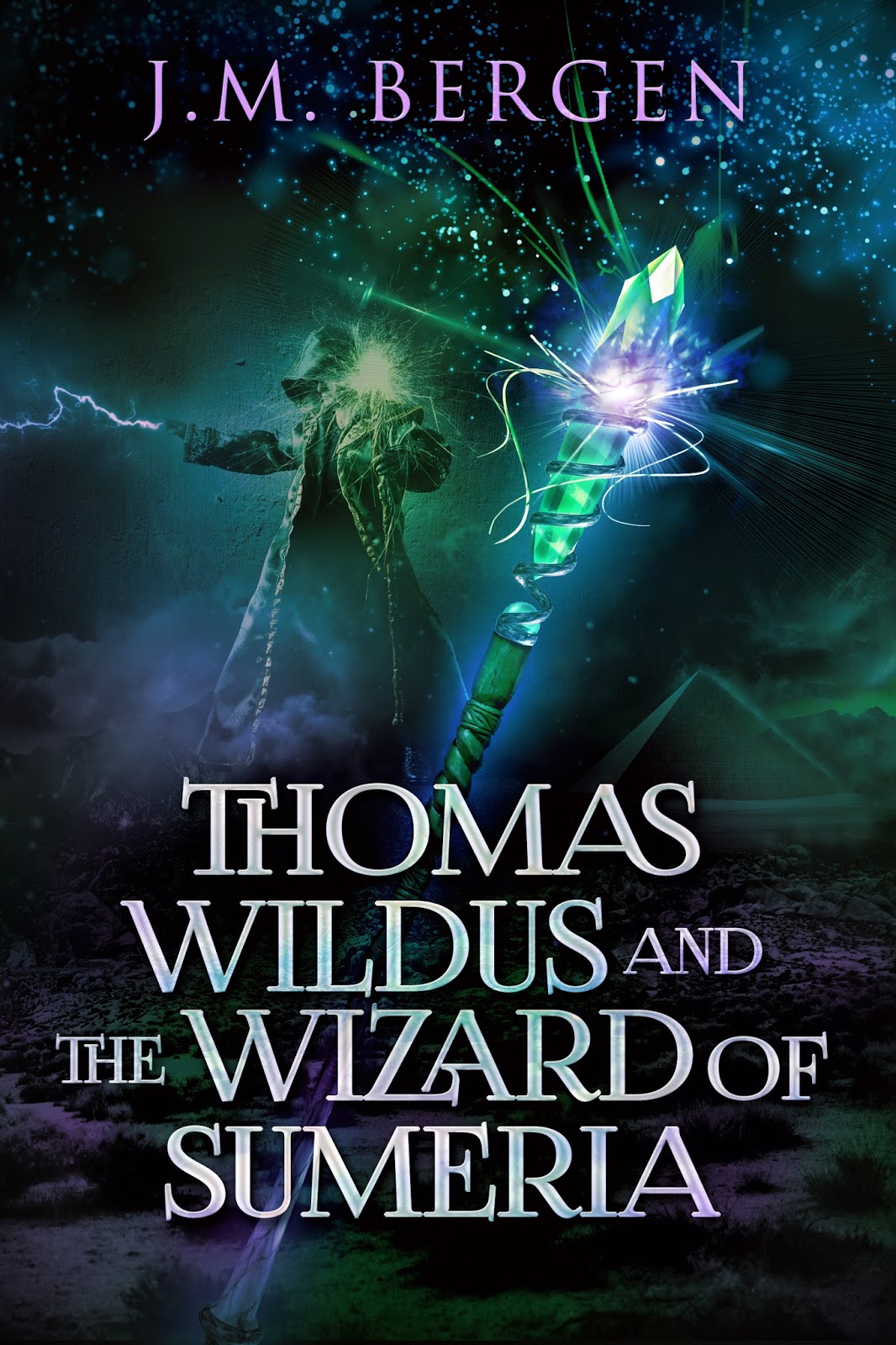
Interview with middle-grade fantasy novelist J.M. Bergen

Helping me kick off a new week is novelist J.M. Bergen. He’s chatting with me about his new middle-grade fantasy, Thomas Wildus and the Wizard of Sumeria.

Bio:
J.M.’s debut fantasy/magic series originally started as a bedtime story for his oldest son. The story turned into a saga, and one book turned into five. Thomas Wildus and The Book of Sorrows was released in February, 2019. The book won the Feathered Quill Book Award, a Readers’ Favorite Book Award, and was an award winning finalist in both the American Book Festival and the Red City Review Book Awards.

When J.M. isn’t working on the Thomas Wildus books, you can find him playing with his kids, napping, or dreaming up new adventures. If you ever meet him and can’t think of anything to talk about, you might ask about Herman the Shark, the Kai and Eli stories, or why Riddle-Master by Patricia McKillip is his all-time favorite book. Or maybe you’ll have questions and stories of your own - if you do, he’ll think that’s far more interesting.

Please tell us about your current release.
In the first book in this series, Thomas Wildus discovered a secret family legacy of magic and began to unlock his extraordinary abilities, all while racing to prevent a ruthless billionaire-magician from securing the ability to control - or destroy - the world.

The adventure resumes when a surprise message from a mysterious hacker lets Thomas and his friends know that the fight isn’t over. To the contrary, it seems that their nemesis is after an even more powerful magical object than before, and this time he’s gathering the forces of darkness to his side. Deceptions abound, new characters come into play, and the stakes are nothing short of the fate of the world. It’s a wild ride!

What inspired you to write this book?
The entire series was inspired by bedtime stories, and it was clear relatively early that it was going to take a relatively long series to cover the entire journey (there are a total of 5 books planned in the main series).


Excerpt from Thomas Wildus and the Wizard of Sumeria:
“Hey, what’s that about?” Thomas stepped into the lab and stared at the panel of monitors.

“What’s what about?” Akhil pushed past and glanced at the bank of monitors that covered the far wall. Every screen had gone blank except for a single row of huge white letters running across the center.

The STAFF is REAL, NERDLINGS. Find it, or he will. TIME IS RUNNING OUT.

“What the—?” Akhil stared at the center screen in the large display.

“That’s not right.” Enrique crossed his arms and stared slantwise at the monitor.

“I don’t understand.” Akhil jumped into his chair and punched commands into the keyboard. “This network is built to the same standard as an NSA data center. This shouldn’t be possible.”

Enrique looked at the screen. “I don’t know what should or shouldn’t be possible, but someone did that and it prob- ably wasn’t your dad.”

“My dad is flying home from a conference in Switzerland.” Akhil continued to type furiously. “He’s been on a plane for the past six hours. There’s no way this was him.”

Perplexed, Thomas stared at the message. “I’m less worried about the hacking than the message. What staff? And who is this ‘he’?”

“Arius?” Enrique looked from the message to Thomas, his greenish eyes suddenly concerned. “Who else could it be?”

A shiver ran up Thomas’s spine. Just a few months earlier, Arius Strong and his followers had nearly recovered a crystal that would have given Arius extraordinary power and put the entire world in jeopardy. Arius’s quest had ended in Sumidero Canyon, with a battle that destroyed the crystal and left two of Thomas’s mentors seriously injured. Scott Alpheus had taken Arius’s sight as punishment, but the enigmatic billionaire was still a formidable enemy.

Akhil tapped another button. The words on the screen disappeared and were replaced with the typical interface and command prompt. Clearly annoyed, he pushed his chair back. “Why would someone who has the skills to break into a system like this bother to send a message like that? I don’t get it.”


What exciting story are you working on next?
Thomas Wildus and the Shadow of Elandria isn’t scheduled for publication until next summer, but already it’s shaping up to be quite an adventure!

We recently put out a short prequel to the series as well - The First Crystal – which can be purchased on Amazon but is available for free for your readers if they follow the link.

When did you first consider yourself a writer?
I was a creative writing major in college, and even though I had a few poems picked up in anthologies, I didn’t feel like a ‘real’ writer until my first full-length book was finished and on the market.

Do you write full-time? If so, what's your work day like? If not, what do you do other than write and how do you find time to write?
My morning typically starts with some combination of meditation, martial arts, and writing, and I tend to write until either I run out of steam or one of my kids needs help with something. The rest of the day varies quite a lot, but typically includes a bit of creative work and a bit of practical ‘getting things done’ type stuff.

What would you say is your interesting writing quirk?
When I first started writing the tendency to overthink and over-edit was so overwhelming that I sometimes forced myself to write with my eyes closed. I still do that from time to time, and it still helps get the inner critic out of the way.

As a child, what did you want to be when you grew up?
If you’d asked me as a ten year old I’d have probably said baseball player, but writer would have been right in the neighborhood as well. Today, writer tops the list, and I’d love to do some work with the film and television industry.

Anything additional you want to share with the readers?
Just how much I value and appreciate their support. Writing is something I’d gladly do for free (and have, for a good part of my life), and being able to share my work with people who enjoy and appreciate it is literally a dream come true. It brightens my day every time someone recommends Thomas Wildus to a friend, or leaves a positive review, or tells me how much they or their kids enjoyed one of the books. The critical feedback has been helpful as well, and I feel like my readers are responsible for a large part of my growth.

Links:

Friday, June 12, 2020

Interview with writer Donna Koros Stramella

Today’s special guest is Donna Koros Stramella. She’s chatting with me about her new women’s fiction, Coffee Killed My Mother.

Bio:
Donna Koros Stramella is a writer from Maryland whose fiction and nonfiction pieces have been published in Adelaide Literary Magazine, Scarlet Leaf Review, Columbia Magazine, and the Baltimore Sun. She is a previous award-winning journalist and a graduate of the University of Tampa MFA in Creative Writing. Currently, she is working on her second novel, Among the Bones.

Welcome, Donna. Please tell us about your current release.
Coffee Killed My Mother explores the story of an unusual mother-daughter relationship, told through the eyes of an anxious 17-year-old Anna Lee. Her life is stuck, largely because of her strained relationship with her mother Jacqueline, a quirky recovering alcoholic who is now addicted to coffee. The two take off on a trip to explore independent coffee shops along the east coast, but Jacqueline's real agenda is an opportunity to reveal a series of disturbing family secrets to Anna Lee--a twin who died in utero, a fatal drunk driving accident, an abusive parent, and her mother's betrayal of a woman Anna Lee holds dear.

What inspired you to write this book?
As a mother and a daughter, I’ve always been interested in the special relationships between mothers and daughters. I wanted to examine how the relationship between two wildly different individuals would be affected by long-held secrets.


Excerpt from Coffee Killed My Mother:
In this excerpt, a young Anna Lee uncovers one of her mother’s secrets:

When I was 11, the city of Northern Beach started curbside recycling. The earth-conscious residents of the town no longer had to separate their plastic and paper and tin, then drive it to the large white bins near the library. After my mother’s nail snagged on the corner of the plastic, the curbside responsibility was passed to me.

On the first night of my duty, I discovered a secret. As I pulled the heavy square bin behind me, I heard the sound of rolling, then glass clinking beneath the flattened cereal boxes and newspapers. At the end of our two-car-length driveway at the curb beside the mailbox, the street light and crescent moon gave me just enough light. I moved the cardboard and paper back to see what made the sound. Wine bottles. A dozen or more. Maybe my mother had saved them up, I’d reasoned. Maybe she’d planned to do something with them and had them stashed away. I never saw her drink wine, although occasionally, I’d see a wine glass in the sink or drying on a countertop towel.

The next week, I figured the bin would be lighter. But it wasn’t. Each week at the mailbox, I’d get a sick feeling in my stomach as I pulled back the stuff on top. And there they were. Fourteen, fifteen, sixteen wine bottles. The most was eighteen. I turned them over to read the labels: Pino Noir and Pino Grigio. Sauvignon Blanc, and Cabernet Sauvignon. And lots of Sangria. The yellow price stickers revealed my mother’s top criteria for her selections—nothing over $10.

Week after week, I’d drag that bright yellow bin to the curb, the bottles rolling around like bowling pins that had been knocked down.


What exciting story are you working on next?
I’m about one-third into my next novel, Among the Bones. Set in the Pacific Northwest, the story features a group of diverse residents in a wildly unusual community, all looking to escape something from their past. There’s a series of murders that simmer in the background of the story, but ultimately move to the forefront.

When did you first consider yourself a writer?
I wrote for a couple school newspapers, starting in grade school. I think the first time I saw my story in print, I knew I was a “real” writer. Although I’ve been blessed to work as a writer for most of my career, the title “author” eluded me until this year.

Do you write full-time? If so, what's your work day like? If not, what do you do other than write and how do you find time to write?
I worked full time while writing my first book, which was a challenge. I started the book during the last term of my MFA program at University of Tampa. My time in that program not only greatly improved my writing, but also helped me develop a dedicated writing schedule. Now I’m only working part-time, which gives me more time for the new novel. Since my “outside” work has also been as a writer, I sometimes found it hard to sit down and dedicate myself to creative work after I’d been writing all day at my job.

On the days that I’m writing, I get up early and work in a quiet space that I’ve set aside. On a good day, I’ll write for a full eight hours. On a day when the warm weather and sunshine is calling me outside, I’ll work for a minimum of three hours. I write most weekdays and sometimes on Saturday.

What would you say is your interesting writing quirk?
I have a couple of candles on my desk from my daughters—one labeled “rich coffee aroma” and the other “bookstore.” Even if I don’t light them, I’ll open the lid and sniff when I need a bit of inspiration! When I’m really stuck, I’ll take a short walk and send up a prayer. If the candle doesn’t work, the prayer always does!

As a child, what did you want to be when you grew up?
For as long as I remember, I wanted to be a writer, so much so that when I was young, I asked Santa for a desk and a typewriter—which I received. I’ve always had an active imagination, always thinking—what if this situation had gone in another direction? My nightly dreams are colorful and vivid and I’m often jotting them down when I wake. I see those dreams as gifts from above.

Anything additional you want to share with the readers?
Like most authors whose books were recently published, I’ve had to switch gears. My marketing strategy was based mainly on events in New York City, Baltimore, and DC. I’ve had to transition quickly and have been so fortunate to receive support from others—especially bloggers (thank you, Lisa!). I’ve had reviewers suggest my book is a good fit for book clubs, and I’d love to provide discussion questions and “zoom in” to virtual meetings.

It’s a great time to read something new, and I’ve been opening myself to read new genres. I try to do my part by promoting the work of other authors on my FB page. It’s a big supportive community, and I’m glad to be a part of it!

Links:

Thanks for being here today, Donna!